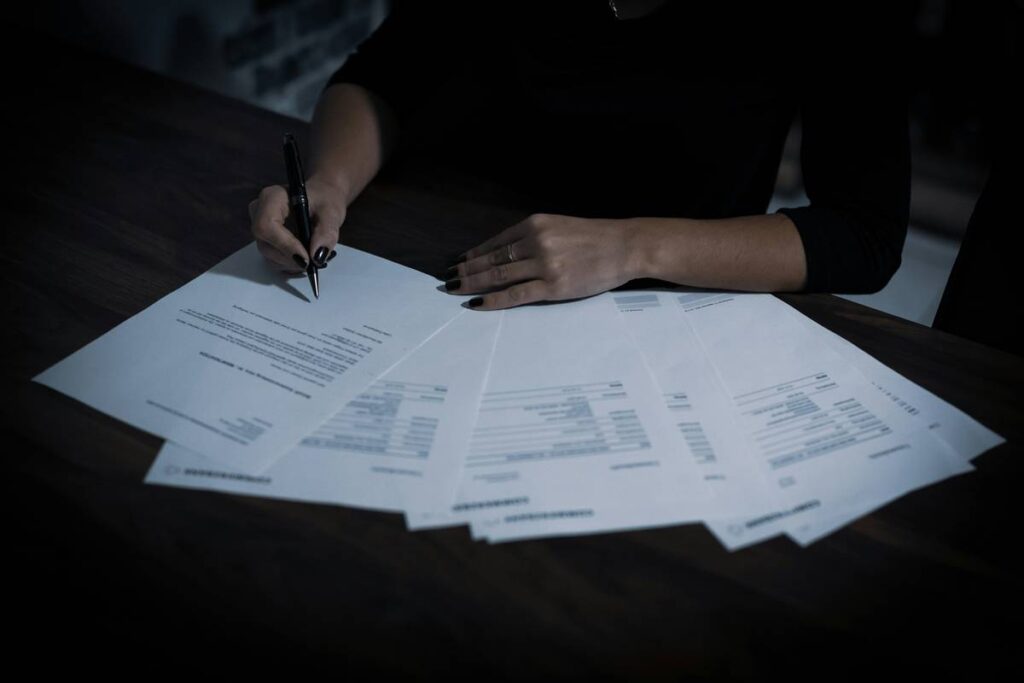
Ever finished a gig only to realize your client vanished—along with your final payment? Or worse, you’re knee-deep in revisions they swore weren’t “scope creep”? You’re not alone. Upwork’s 2023 Freelancer Survey found that **68% of freelancers** have faced non-payment or scope disputes—and nearly half never had a written agreement.
If you’re selling freelance courses, coaching, or digital services without a rock-solid freelance agreement draft, you’re handing money and peace of mind to the wind. This post cuts through legal fluff to give you exactly what you need: a battle-tested framework used by top-earning course creators, real clauses that prevent nightmares, and free tools to automate it all—without hiring a lawyer for every $500 gig.
You’ll learn:
- Why most DIY freelance contracts fail (and how yours can stand up in court)
- The 5 non-negotiable clauses every course creator must include
- Free apps that generate enforceable agreements in under 10 minutes
- A real case study where a missing clause cost a freelancer $4,200
Table of Contents
- Key Takeaways
- Why Do So Many Freelancers Skip Contracts?
- How to Draft a Freelance Agreement That Actually Protects You
- 7 Best Practices Most Freelancers Ignore
- Real Case Study: How One Missing Clause Cost $4,200
- FAQs About Freelance Agreement Drafts
Key Takeaways
- A verbal agreement is legally binding—but nearly impossible to enforce. Always use a written freelance agreement draft.
- Your contract must specify deliverables, payment terms, IP ownership, termination rights, and dispute resolution.
- Tools like HelloSign, Bonsai, and PandaDoc offer free templates vetted by lawyers—no JD required.
- Never reuse a client’s template without review. Their “standard” contract often favors them heavily.
- Store signed agreements digitally (not just email) using secure cloud storage like Dropbox or Google Drive with audit trails.
Why Do So Many Freelancers Skip Contracts?
“It feels awkward,” “They’re a friend,” “The project’s too small”—sound familiar? I’ve heard it all. Early in my career, I delivered a full online course curriculum (think modules, worksheets, quizzes) to a “trusted” referral… only to get radio silence after invoicing. No signed agreement. No leverage. Just crickets and a maxed-out credit card from building the damn thing.
Here’s the brutal truth: freelancing without a written agreement isn’t “trusting”—it’s gambling. And according to the Freelancers Union, nearly 77% of payment disputes could’ve been avoided with clear written terms.

Worse, if you’re teaching others how to freelance (hello, course creators!), skipping contracts undermines your authority. Students notice. Prospects hesitate. Trust evaporates faster than your laptop fan during a 4K export—whirrrr.
How to Draft a Freelance Agreement That Actually Protects You
Forget legalese that sounds like it was translated from Latin via Google. A strong freelance agreement draft is clear, specific, and covers your six core risk zones. Here’s how to build one—even if you’ve never touched a contract before.
What essential elements must my freelance agreement include?
Optimist You: “Just list the work and price—it’s simple!”
Grumpy You: “Ugh, fine—but only if coffee’s involved… and you actually read the fine print.”
- Parties Involved: Full legal names (or business names), addresses, and contact info. No “John @ Gmail.”
- Scope of Work: Be hyper-specific. Instead of “create a course,” write: “Develop 6 video lessons (10–15 mins each), 3 PDF workbooks, and 12 quiz questions on email marketing fundamentals.”
- Payment Terms: Amount, due dates, late fees (e.g., 1.5% monthly), and payment method. Specify if it’s milestone-based or flat fee.
- Intellectual Property (IP): Who owns what upon payment? Default = client owns deliverables. But you may want license rights to showcase work.
- Termination Clause: How either party can exit, and what’s owed (e.g., “Client pays for completed work + 25% of remaining balance if terminated without cause”).
- Dispute Resolution: Require mediation or arbitration before lawsuits. Saves time and thousands in legal fees.
Which free tool should I use to generate my freelance agreement draft?
Don’t reinvent the wheel. These apps offer lawyer-reviewed templates you customize in minutes:
- Bonsai: Built for freelancers. Auto-generates contracts, invoices, and tracks time. Free plan available.
- HelloSign (Dropbox Sign): Clean interface, e-signature support, and reusable templates.
- PandaDoc: Ideal for service-based creators. Drag-and-drop editor with conditional logic (e.g., show/hide clauses based on project type).
7 Best Practices Most Freelancers Ignore
Here’s where amateurs and pros diverge—not in talent, but in paperwork discipline.
- Never sign first. Send your draft, not theirs. Clients’ templates often limit liability or demand unlimited revisions.
- Define “revision rounds” explicitly. “Two rounds of minor edits included; additional changes billed at $75/hr.”
- Include a kill fee. If the client cancels mid-project, you still get paid for work done + a buffer (e.g., 30%).
- Specify communication channels. “All project updates via Slack by 5 PM EST Mon–Fri.” Prevents chaotic DMs at 2 AM.
- Add a confidentiality clause. Crucial if you access their sales data, student lists, or unreleased course content.
- Require e-signature. Typed names aren’t legally binding everywhere. Use DocuSign or HelloSign for audit trails.
- Store agreements securely. Not just email—use password-protected cloud folders with version history.
🚫 Terrible Tip Alert
“Use a random PDF from Reddit labeled ‘freelance contract template.’” Nope. Generic templates often omit jurisdiction-specific rules (e.g., California requires different IP clauses). Always verify with a local attorney if revenue exceeds $10k/project.
Rant Time: My Pet Peeve
Why do so many freelancers treat contracts like an afterthought? Like, “Oh, we’ll figure it out later!” Later is when your client says your course “isn’t converting” and demands a refund—despite zero KPIs defined upfront. Do the boring work now so you don’t cry later. Period.
Real Case Study: How One Missing Clause Cost $4,200
Last year, “Mia” (a course creator I mentor) landed a $6k project building a LinkedIn personal branding course for a startup. She used a basic template but forgot the kill fee clause. Two weeks in, the client ghosted her. No response. No payment for completed work.
Because her contract lacked termination terms, she had no legal recourse. The platform she used (Fiverr) sided with the buyer. Outcome: $4,200 in lost income and three sleepless nights.
Compare that to “Dev,” who includes this clause in every freelance agreement draft:
“If Client terminates this Agreement without Cause, Client shall pay Freelancer for all Services rendered up to the termination date plus 30% of the remaining Contract Value as a cancellation fee.”
When his client backed out last month, Dev invoiced the kill fee—and got paid within 48 hours. Paperwork > hope.
FAQs About Freelance Agreement Drafts
Do I need a lawyer to review my freelance agreement draft?
For projects under $5k, reputable templates (like Bonsai’s) are usually sufficient. For larger contracts or complex IP, spend $200–$300 on a 1-hour legal consult. It’s cheaper than litigation.
Can a verbal agreement hold up in court?
Technically yes—but proving terms is nearly impossible without witnesses or records. Always get it in writing.
What if my client refuses to sign a contract?
Walk away. That’s a red flag for future disputes. As finance expert Ramit Sethi says: “Professionalism isn’t optional—it’s your filter.”
Are digital signatures legally binding?
Yes, thanks to the U.S. ESIGN Act and similar laws globally. Tools like DocuSign create tamper-proof audit trails.
Conclusion
Your freelance agreement draft isn’t bureaucracy—it’s your financial armor. Whether you’re selling $97 mini-courses or $10k masterminds, skipping this step risks your income, reputation, and sanity. Use the clauses above, leverage free tools like Bonsai, and never apologize for protecting your work.
Remember Mia’s $4,200 lesson: clarity today prevents catastrophe tomorrow. Now go draft that agreement—and invoice with confidence.
Like a Tamagotchi, your freelance business needs daily care. Feed it good contracts.